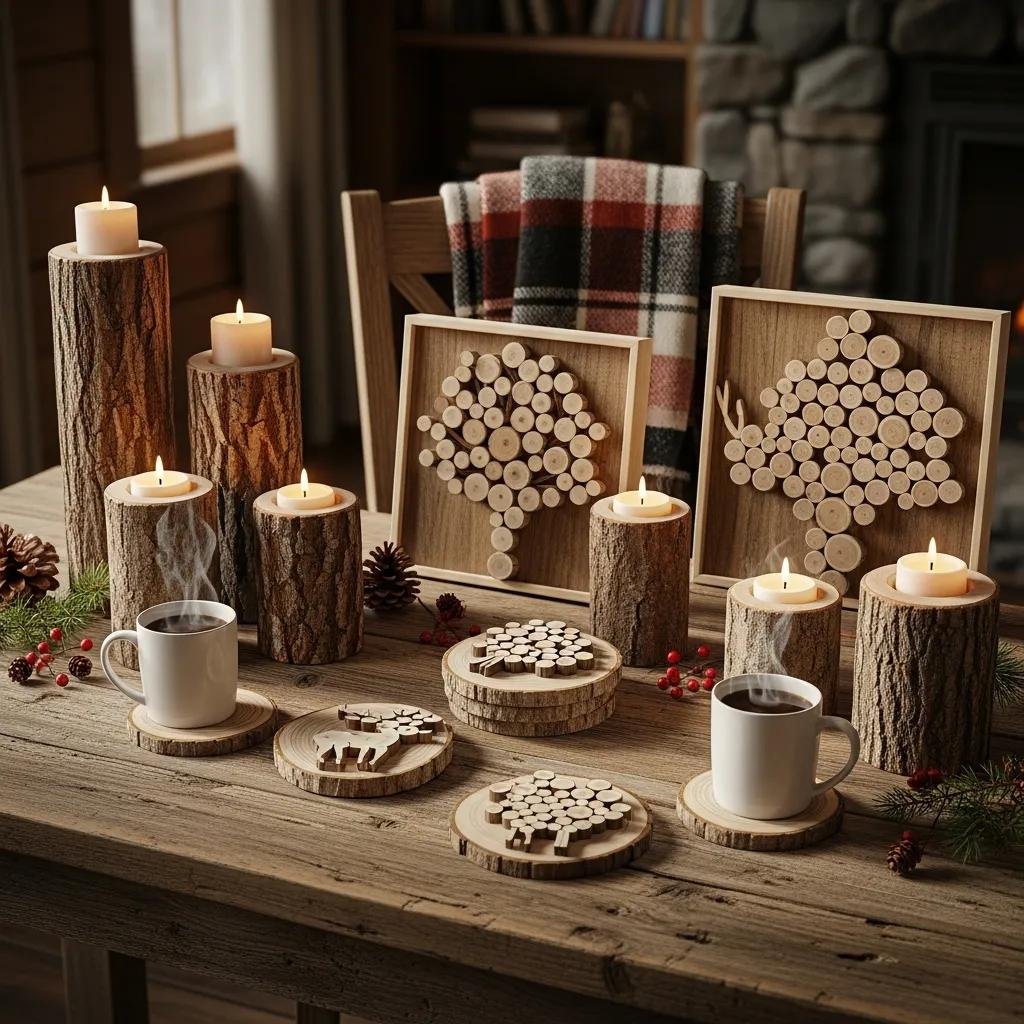
DIY Firewood Projects: Rustic Crafts and Home Accents
Firewood offers an abundant, affordable material for makers who want to create rustic decor and practical home accents with personality and sustainability. This guide teaches how to turn log rounds, wood slices, and split firewood into candle holders, wall art, furniture, racks, seasonal ornaments, and sellable handmade products using clear techniques for sourcing, seasoning, tools, finishing, and safety. Many hobbyists struggle with warped pieces, sap pockets, or finish failure when they use green or improperly dried wood, and this article explains simple solutions so projects last and look professional. You will find curated project ideas, step-by-step how-tos for beginner-to-intermediate builds, essential woodworking techniques, and monetization strategies to convert upcycled wood art into income. The sections below cover the best firewood craft ideas for rustic home decor, practical furniture and storage builds, seasonal craft inspiration, foundational wood prep and safety, selling strategies, and maintenance plus customization tips to keep pieces beautiful over time.
Ensuring the longevity and aesthetic appeal of wooden crafts often involves careful preparation, including treatments that enhance durability and color.
Fumigation for Durable & Attractive Wooden Handicrafts
West Kalimantan wooden craft is internationally well known and its export is increasing. Currently, high durability and attractive color of wood material such as belian (Eusideroxylon zwageriTeysm & Binnend) is rarely available, then alternatively mangium(Acacia mangiumWilld.) and laban wood (Vitex pubescensVahl.) are used for handicraft. Fumigation is one possible way to improve wood service life and color shades. This paper determines the impact of traditional fumigation on wood raw material on physical, mechanical and anatomical properties.
The effect of traditional fumigation on physical, mechanical and anatomical properties of wooden handicraft in west Kalimantan, F Diba, 2019
What Are the Best Firewood Craft Ideas for Rustic Home Decor?
Firewood crafts transform natural log textures into decorative objects that add warmth and character to living spaces, because wood’s grain, bark, and growth rings create organic contrast and tactile interest. The material works well for rustic decor because log rounds and wood slices provide ready-made shapes that require minimal joinery, so makers can focus on layout, finish, and display. Below is a curated, snippet-style list of high-impact firewood projects with one-line descriptions and difficulty estimates to help you choose an approachable build. The list highlights common hyponyms like birch log candle holders and wood slice coasters and prepares you to collect the right meronyms—wood slices, bark, sapwood—before beginning a project, which leads directly into a how-to for candle holders in the next subsection.
The best firewood craft ideas for rustic home decor include:
- Firewood candle holders: Hollowed log sections that hold tealights or pillar candles for cozy accent lighting.
- Wood slice coasters: Sanded rounds sealed with waterproof finish for table protection.
- Log side tables: Stacked or slab-topped log tables that serve as rustic end tables.
- Wood-slice wall mosaic: Arranged rounds glued to a backing to create natural art panels.
- Centerpiece log trays: Low log sections with shallow hollows for seasonal styling.
- Mounted log shelves: Floating shelves made from halved logs with discreet hardware.
- Bark-edged picture frames: Frames using bark-on slices to frame small prints or botanicals.
- Rustic coat pegs: Short dowel pegs inserted into a log board for an entryway rack.
These project names introduce practical options; the following subsections show step-by-step guidance for two of the most accessible and visually rewarding ideas.
How to Create Firewood Candle Holders for Cozy Ambiance
Firewood candle holders are log sections with drilled cavities designed to hold candles safely, and they work because solid wood buffers heat and presents a natural base that contrasts flame light. Begin by selecting straight-grained dried logs roughly 3–4 inches in diameter for tealights or 4–6 inches for votives, and check that the wood is seasoned to reduce splitting. To make the holder, cut slices 1.5–2 inches thick on a miter or band saw, mark centers, and drill with the correct diameter Forstner or spade bit to the candle depth while clamping the slice securely. Finish by sanding edges and sealing with a heat-resistant finish; always test one holder for heat behavior before selling or gifting. With safe drilling and clear finishing, these holders become centerpiece pieces that transition naturally into wall art and mosaic approaches.
What Firewood Wall Art Projects Add Natural Charm to Your Space
Wood-slice wall art uses many small log rounds assembled into a mosaic, and the method works because repeating circular meronyms (log rounds, growth rings) create rhythm and a focal texture on a wall. Easy variations include a simple grid of uniform slices, a radial sunburst from a larger central round, or a geometric inlay using different species for color contrast like birch and oak. Mounting requires a rigid backing—plywood or MDF—adhesive rated for wood, and hidden keyhole or French cleat hangers depending on weight; consider a moisture-barrier between backing and wood if hanging in humid areas. Finishing lightly with oil or matte sealer preserves natural color while minimizing glare, and the right mounting method leads into considerations for furniture and storage that balance weight and accessibility.
How Can You Build Functional Firewood Furniture and Storage Solutions?
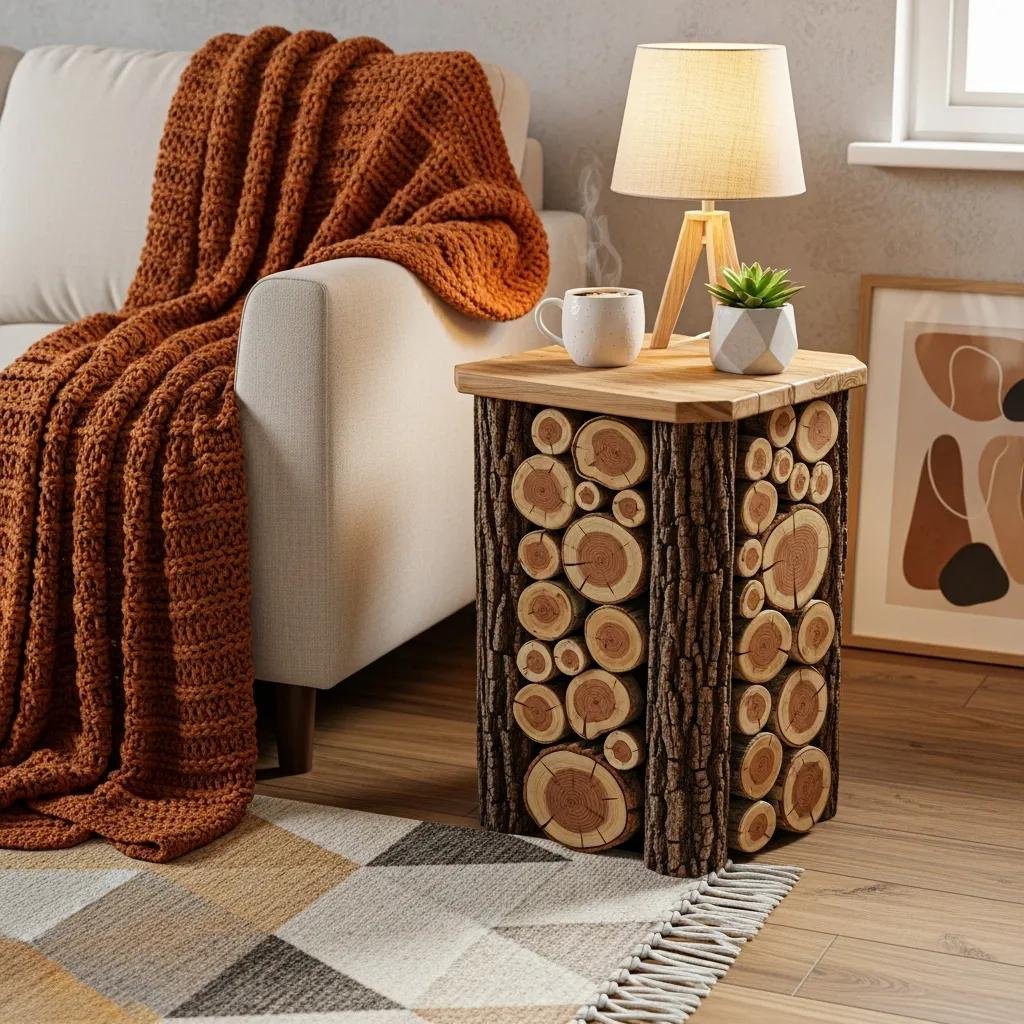
Functional furniture and storage turn raw logs into useful home pieces like stools, side tables, benches, and racks, because joinery and weather-resistant choices create durable, attractive items that showcase rustic log decor. This section defines practical approaches and provides a quick comparison table to help pick projects by time, skill, and intended location, and then dives into two common builds—side tables/stools and firewood racks—so you can move from idea to workshop plan. The comparison table below helps you choose the right project for your available time and tools, and it transitions to the next subsection about simple side tables.
| Project | Estimated time | Skill level |
|---|---|---|
| Side table (single log base) | 2–4 hours | Beginner–Intermediate |
| Stacked log stool | 3–5 hours | Beginner |
| Bench (slab or log legs) | 4–8 hours | Intermediate |
| Covered outdoor firewood rack | 3–6 hours | Intermediate |
| Indoor log storage basket | 2–3 hours | Beginner |
This comparison clarifies how project choice affects tools and finishes, and the next subsection describes accessible side table and stool options that align with the time and skill levels listed.
What Are Easy DIY Firewood Side Tables and Stools to Make?
Simple side tables and stools use a solid log or stacked rounds as a base with a sanded wood-slice or slab top, and this construction works because minimal joinery reduces build complexity while preserving rustic aesthetics. For beginners, bolt a prepared round top to a single log base using through-bolts and washers, or attach with heavy-duty wood glue and hidden fasteners for permanent pieces; dowels or threaded inserts add stability for movable furniture. Dimension suggestions include seat heights of 16–18 inches for stools and 22–24 inches for side tables, and top diameters of 12–18 inches depending on use; sand the top to 120–220 grit and round edges for comfort. Finish indoor pieces with penetrating oil or satin polyurethane, and use an exterior spar varnish for outdoor items; understanding these finishing choices prepares you for building durable racks next.
How to Construct Durable Firewood Racks for Indoor and Outdoor Use
Durable firewood racks store and protect fuel or logs used as decor, and proper design addresses drainage, air circulation, and rot resistance so stacked wood stays dry and safe. For outdoor racks, use rot-resistant materials like cedar or pressure-treated lumber for the frame and elevate the bottom with spacers or a slatted base to prevent ground moisture transfer; provide a sloped roof or cover to shed water while keeping the sides ventilated. Indoor racks favor aesthetics—consider metal brackets with stacked log rounds or a compact vertical slatted cabinet that allows air flow to keep slices dry for decor use. Anchor large racks to a wall for safety and incorporate drainage and spacing considerations, which naturally leads into wood selection and seasoning strategies covered in the next section.
Which Seasonal and Holiday Firewood Crafts Enhance Your Home's Atmosphere?
Seasonal firewood crafts capitalize on the material’s cozy connotations—winter mantels, fall centerpieces, and spring garden accents—because logs and slices evoke different moods when paired with seasonal textures like evergreen, pumpkins, or blossoms. This section lists seasonal projects by season and demonstrates how simple finishes and storage approaches allow you to reuse pieces across holidays, while also suggesting gifting options for handmade ornaments. The next subsections give concrete examples for Christmas decorations and fall/spring accent projects to inspire immediate builds and gift ideas.
Seasonal firewood projects are easy to store and adapt, and the examples below are designed for gifting and quick setup.
How to Make Firewood Christmas Decorations and Rustic Ornaments
Firewood Christmas decorations use small slices, drilled and strung, or stacked mini-log trees, and they work as ornaments because the wood’s rings and bark offer a handcrafted, tactile base for paint, pyrography, or stamped motifs. Begin with 1/4–1/2 inch slices for ornaments, sand both faces smooth, and drill a small hole near the edge for twine or ribbon; seal with a food-safe oil or matte sealer if you plan to add edible accents like dried orange slices. For mantel displays, create tiered log trees by stacking graduated rounds and securing with a central dowel or threaded rod, then decorate with tiny lights or natural garlands. Packaging small ornaments in tissue and kraft boxes elevates gifting presentation and creates repeat buyers if you sell seasonally, which transitions to fall and spring variations that repurpose similar slices.
What Are Creative Fall and Spring Firewood Accent Projects?

Fall and spring accent projects use log pieces as tabletop vignettes, planter risers, or porch decor, because the same log slice can act as a neutral base for seasonal styling with minimal alteration. In fall, hollowed log centers become candle-group vessels or pumpkin stands; treat interiors with a water-resistant sealer for battery candles. In spring, use short log risers to elevate small potted plants or birdhouses, sanding tops and adding a light protective oil to withstand mild outdoor exposure. Quick upcycle ideas include painting half-slice pumpkins, adding moss and succulents to shallow hollows, and combining wood slices with seasonal textiles for layered displays that can be stored and reused across seasons.
What Are Essential Firewood Crafting Basics and Advanced Woodworking Techniques?
Sourcing, seasoning, and selecting appropriate tools are foundational because wood species, moisture content, and tool choice determine whether a project warps, cracks, or finishes well; understanding these basics prevents common failures. This section defines seasoned versus green wood, compares wood species for durability and craft suitability in an EAV table, and summarizes essential and advanced tools plus safety practices. Read on for the wood types comparison, then practical instructions on sourcing and seasoning to ready logs for craft use.
Indeed, proper wood seasoning is a critical first step, offering numerous benefits beyond just preventing immediate damage.
Wood Seasoning for Craft Durability & Finish
One of the most important and effective measures for wood protection is seasoning. Seasoning starts immediately after the cutting of green trees even in an atmosphere highly saturated with water vapor. At first liquid or free water (in practice commonly called “sap”) is removed and eventually the fiber saturation point is reached. However, the disadvantage of shrinkage in the course of seasoning is more than offset by a remarkable number of advantages: reduction of warping, twisting, splitting, checking, and honeycombing; reduction in weight; increase in stiffness, mechanical strength, hardness; improvement of paintability (wet wood should not be painted).
Steaming and seasoning of wood, 1968
Choosing the right wood species and drying technique reduces splitting and insect risk, and the table below helps you weigh durability against ease of use when selecting logs.
| Wood Species | Durability | Craft suitability |
|---|---|---|
| Oak | High | Excellent for structural pieces and heavy-use furniture |
| Birch | Medium | Attractive pale grain; great for slices and wall art |
| Pine | Low–Medium | Easy to work; good for painted or sealed accents |
| Maple | High | Tight grain, good for smooth finishes and coasters |
| Cedar | High | Naturally rot-resistant; ideal for outdoor racks |
How to Source and Season Firewood for Quality DIY Projects
Sourcing suitable firewood means selecting straight, defect-light logs from disease-free trees or reclaimed timber, because knots and rot cause weakness in finished pieces and insect presence can ruin crafts over time. Seasoned wood has been dried until stable—typically below 12–15% moisture content for small craft pieces—and shows signs such as small radial cracks, darker ring contrast, and a lighter weight compared with green wood. Dry small slices by stacking with spacers in a ventilated area or use a low-temperature kiln/drying chamber for faster results; seal ends with wax or commercial end grain sealer to reduce end-splitting while drying. Inspect for pests and cure thoroughly before finishing or cutting; these sourcing and seasoning steps naturally prepare you to select proper tools and follow safety protocols in the next subsection.
This meticulous drying process is essential to avoid common issues that can compromise the integrity and appearance of your finished pieces.
Wood Seasoning to Prevent Warping
seasoning and kiln-drying of wood is such an important process in the manufacture of woods by ordinary methods without warping and twisting. It does not check badly, is tasteless and
Seasoning of Wood: Exploring the Craft and Mystique of Wood Seasoning: A Journey Through History and Science, 2019
Which Tools and Safety Practices Are Needed for Firewood Crafts
Effective firewood crafting uses both hand tools and selective power tools, and safe practices protect you from dust, kickback, and accidental cuts while producing cleaner results. Beginner tool essentials include a handsaw, chisels, clamps, drill with Forstner bits, orbital sander, and a tape measure, while intermediate makers might add a jigsaw, router, and miter saw for precision cuts; advanced users may use a band saw and thickness planer. Safety equipment should always include eye protection, a dust mask or respirator for sanding and cutting, hearing protection, and secure clamping systems; use push sticks and avoid freehand cutting where possible. Establish a clean, well-ventilated workspace and plan cuts methodically to reduce mistakes and transition into monetization considerations when you’re producing consistent, high-quality pieces.
How Can You Monetize Your Upcycled Wood Crafts Successfully?
Turning firewood crafts into income requires accurate cost accounting, appealing presentation, and platform selection so your items find the right buyers and generate profit, because handmade pricing must reflect materials, labor, overhead, and perceived value. This section outlines pricing strategies, provides a sales-channel comparison table, and offers practical tips on photography, branding, and packaging that increase conversion. After the channel table, a short actionable block explains simple ways to test pricing and begin selling locally and online without overwhelming operational complexity.
| Platform | Fees & audience | Best for |
|---|---|---|
| Online marketplaces | Listing and transaction fees; broad handmade audience | Scalable listings of small decor and ornaments |
| Local craft fairs | Booth fees; direct buyer feedback and cash sales | Quick testing of price points and presentation |
| Consignment/retail | Percentage-based fees; curated shopper base | Higher-ticket furniture and finished decor |
| Social platforms | No listing fees but requires audience building | Quick local sales and direct-to-customer orders |
This table helps you choose channels and leads to pricing strategy guidance that balances costs and perceived value.
Pricing strategies balance material and labor costs with market positioning, and three practical methods help convert hobby builds into profitable items. Cost-plus pricing adds all material and labor costs then applies a margin; hourly-rate pricing charges a set hourly rate multiplied by build hours and materials; competitor benchmarking sets prices by observing similar handmade items in your chosen channels. Test small batches to find optimal price points and use limited editions or bundled offerings to increase average order value; once pricing is stable, focus on clear photos, concise product descriptions, and tidy packaging to improve conversion. Consider offering local pickup, custom commissions, or workshop sessions to diversify revenue, and these selling tactics prepare you for where to list products and market to buyers.
What Are Effective Pricing Strategies for Handmade Firewood Items?
Effective pricing for handmade firewood items begins with accurate material and labor accounting, because underestimating either leads to negative margins and unsustainable work. Calculate direct costs (slices, fasteners, finishes), add allocated overhead (workspace, tools amortization), and include your desired hourly rate multiplied by build time; this ensures your price covers all inputs. Use tiered pricing: basic decor at entry-level prices, custom or finished furniture at premium levels, and limited-edition runs with slight scarcity premiums to test higher willingness to pay. Present clear product narratives—materials, finish, dimensions—to justify prices, and monitor sales data to adjust rates; understanding pricing feeds into choosing the best sales channels for your work.
Where to Sell Firewood Crafts Online and Locally for Best Results
Selecting the right place to sell depends on item type, scale, and how much audience-building you want to do, because different platforms attract different buyer motivations and tolerate different fee structures. Online marketplaces are ideal for smaller decor and ornaments because they provide discoverability but charge listing and transaction fees, whereas craft fairs and pop-ups offer immediate customer feedback and zero shipping overhead but require time and booth costs. Consignment or local boutiques work well for high-quality furniture or curated pieces that benefit from curated retail audiences, and social platforms can serve local direct-sales and custom commissions with minimal fees but more marketing effort. Optimize listings with clean photography, keyword-rich titles and descriptions, and clear shipping/return policies to increase conversions and transition to maintenance and customization advice for repeat buyers.
What Are Tips for Maintaining and Customizing Your Firewood Home Accents?
Maintaining and customizing log-based decor extends life and enhances style because correct finishes protect against moisture and wear while personalization makes pieces desirable as gifts or boutique products. This section compares common finish types in the following paragraph, then provides actionable maintenance schedules, and a list of personalization techniques for creative variations that appeal to different aesthetics. Read the finishing comparisons to choose a protective layer that suits indoor or outdoor use, which naturally leads into personalization methods.
Choose a finish based on use-case—indoor decorative pieces favor natural oils, while outdoor racks require exterior-grade sealers—because finish selection balances appearance, durability, and cure time.
- Oil finishes provide a natural, penetrative look and are easy to reapply for indoor items.
- Polyurethane delivers durable surface protection and is ideal for high-wear tabletops and stools.
- Spar varnish resists UV and moisture, making it suitable for exterior racks and covered porches.
These finish choices influence maintenance frequency and personalization options, which are described below.
How to Finish and Protect Firewood Crafts for Longevity
Finishing firewood crafts correctly prevents moisture ingress and surface wear, and finishes work by sealing pores, binding fibers, or forming a protective film that resists abrasion and UV. For indoor pieces, penetrating oils like tung or Danish oil enhance grain and are easy to refresh annually; apply multiple thin coats, allow full cure, and buff for a smooth hand. For heavy-use tops, water-based or oil-based polyurethane creates a harder surface—apply thin coats with light sanding between coats and observe cure times to avoid tackiness. Outdoor items benefit from spar varnish or marine-grade finishes and periodic inspection—recoat every 1–2 years depending on exposure—and these finishing practices lead into creative personalization ideas for styling and gift-ready presentation.
What Are Popular Variations and Personalization Ideas for Wood Log Decor
Personalization increases perceived value because buyers and giftees appreciate unique touches like pyrography, epoxy inlays, painted accents, or mixed-material combinations that transform simple logs into signature pieces. Simple customizations include burned initials or patterns using pyrography pens, epoxy fills for sap pockets or knots with color accents, and painted geometric halves for modern rustic looks; each technique pairs well with specific finishes and affects drying/curing steps. Mixed-material combos—adding metal legs, leather straps, or concrete bases—shift aesthetics toward industrial or modern-rustic, while offering options for custom orders increases commission potential. These ideas wrap back to maintenance: choose finishes compatible with personalization methods to ensure lasting results and repeat customer satisfaction.